Termite inspections & termite protection.
Don’t wait until termite damage becomes obvious.
Termites can remain concealed within a building while causing significant damage. Pest-Nett provides professional termite inspections and termite management solutions for Brisbane properties.
If you’ve found something suspicious, don’t disturb it or spray it with household insecticide. Contact Pest-Nett for advice.
Call 07 3206 6721South East Queensland is termite country.
Brisbane and South East Queensland are among the highest-risk termite areas in Australia. Our warm, humid climate suits subterranean termites year-round — they don’t slow down in winter the way they do further south. Species such as Coptotermes and Schedorhinotermes are widespread across the region, and most Brisbane homes are within foraging range of at least one colony.
Older homes on timber stumps, properties with retained timber or mulch close to the slab, and any building with moisture issues near the perimeter are all prime targets. Termite damage is generally not covered by standard home insurance — which makes detection and prevention worth far more than the cost of a repair.
Termite authority, not just a treatment.
What we do.
From a single inspection to a full termite management system, here’s what a Pest-Nett termite engagement can include.
- Termite inspections
- Investigation of suspected termite activity
- Treatment of active termites
- Chemical termite management systems
- Termite baiting and monitoring systems
- Advice on conditions around the property that may increase termite risk
Advanced termite detection tools.
A thorough termite inspection involves more than simply looking for visible signs of termite activity. Our technicians use specialised termite detection equipment to help identify concealed activity, moisture issues and areas that require further investigation.
Timber Sounding Device
We use professional timber sounding tools to assess skirting boards, door frames, architraves and other accessible timbers. Changes in the sound or resistance of timber can indicate internal damage or concealed termite activity that may not be visible from the surface.
Moisture Meter
Termites are often associated with areas of elevated moisture. Our moisture meters allow us to identify unusual moisture levels within walls, floors and building materials, helping our technicians pinpoint areas that may require closer investigation.
Termatrac with Thermal Imaging
The Termatrac is an advanced termite detection tool designed to assist in locating concealed termite activity without unnecessary damage to the building. Combined with thermal imaging technology, it allows our technicians to investigate temperature anomalies and potential termite activity hidden behind walls and other building materials.
Borescope Inspection Camera
When further investigation is required, a small borescope camera can be used to inspect difficult-to-access areas and wall cavities through a small access point. This can help confirm what is happening inside an area without the need for extensive cutting or removal of building materials.
Technology supports experience. No single piece of equipment can guarantee the detection of every termite. That’s why we don’t rely on technology alone — our inspections combine specialised detection equipment with the knowledge and experience of trained timber pest technicians. The result is a more thorough, targeted inspection and better information when deciding what action needs to be taken next.
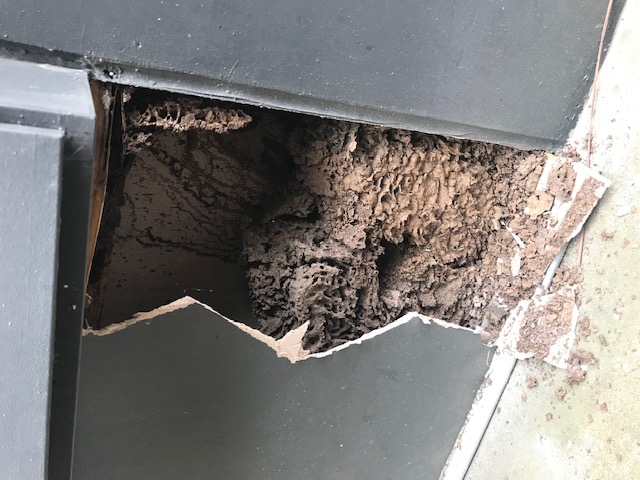
Termites stay hidden — here’s what gives them away.
Most termite activity happens out of sight, inside walls, floors and timber. These are the signs worth checking for around your home.
- Mud tubes running along foundations, piers or walls
- Timber that sounds hollow or feels soft under pressure
- Discarded wings near windows, doors or light fittings
- Doors or window frames that start sticking or warping
- Faint clicking or rustling from inside walls or skirting
- Blistered or bubbling paint or plaster on walls
- Tight-fitting doors and warped skirting boards
The termites active across Brisbane & SEQ.
South East Queensland is home to several species of subterranean termite that cause significant damage to homes and buildings. Knowing which species is present helps determine the right treatment — some respond to barrier systems, others are better managed with baiting and monitoring.
Coptotermes
Coptotermes acinaciformis is found throughout mainland Australia and causes more damage to property than any other species, accounting for more than 70% of termite damage nationally. It is aggressive in its search for food and will attack many items other than wood in its search for cellulose materials — including wall lining boards, electrical wiring, and even personal possessions. A single colony may consist of more than one million termites.
Schedorhinotermes
These termites cause damage approaching the severity caused by Coptotermes. They build fragile nests in places such as old tree stumps, buried timber, filled patios, and under fireplaces. The damage is distinctive — often patchy, with large gouges taken out of sound timber, particularly around nails in floorboards and other timbers.
Heterotermes
A significant structural pest throughout Queensland, northern WA and the NT. In southern Australia they are only a minor nuisance. They generally do little damage to timber in service, restricting their attention to weathered timber fences, decking and posts, though they can occasionally cause superficial damage to sound timber.
Nasutitermes
Several species of Nasutitermes cause significant damage to timber in service. Soldier termites are distinguished by their pointed heads. Nasutitermes walkeri builds part of its colony as a nest on the branch of a tree, with the rest constructed in the ground beneath. This genus mainly attacks hardwood such as that found in fences and timber decking.
Mastotermes
Mastotermes darwiniensis, the Giant Northern Termite, is the most primitive of the commercially significant species. Sub-colonies can split off from the main colony and produce queens without a mating flight, eventually establishing a network of interconnecting sub-colonies that makes control difficult. These large termites can devastate buildings, bridges, poles, trees and crops such as sugarcane. Found mainly north of the Tropic of Capricorn; colonies have also been identified on the Gold Coast.
Microcerotermes
Found along coastal Queensland and New South Wales. They commonly attach their nest to a tree and maintain a soil connection via galleries running down the surface of the trunk, but also establish colonies underground, in small mounds or on posts or poles. Their main point of entry to dwellings is decayed timbers in contact with the ground — poles, posts and fences.
Two accredited systems. One tailored approach.
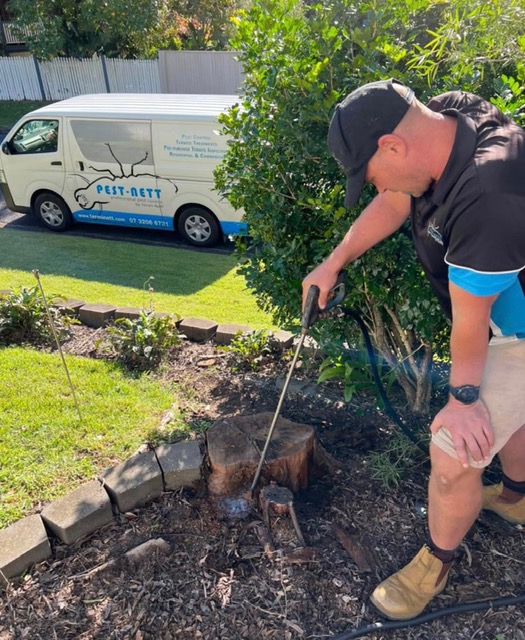
Once we’ve inspected, we recommend the right management system for your property. We’re accredited for both Termidor and Trelona ATBS — we recommend the one that fits, not the one we happen to sell.
Inspection
A full timber pest inspection with a written report — what we found, what's at risk, and what to do next.
Termidor barrier
A continuous treated zone in the soil around and under your home. Termidor is accredited-applicator-only and gives long-lasting protection.
Trelona ATBS
In-ground bait stations that intercept the colony before it reaches your home — monitored annually so the protection keeps working.
Termidor ® chemical barrier
A liquid soil treatment that creates a continuous, long-lasting treated zone around and beneath your home. Termites foraging through the treated soil pick up the active ingredient and carry it back to the colony. Termidor is “transferable” — it doesn’t kill on contact, so the effect spreads through the colony rather than just turning termites away from one entry point.
Best for: slab-on-ground homes where a continuous soil barrier can be established, and properties wanting set-and-forget protection between annual inspections.
Trelona ATBS baiting system
A network of in-ground bait stations installed around the perimeter of your home. Stations are checked at scheduled intervals; when termites feed on the bait, they carry the active ingredient back to the colony and eliminate it. Trelona ATBS is less invasive than a chemical barrier — no trenching, no drilling — and the stations double as an ongoing monitoring system.
Best for: properties where a soil barrier is impractical (concrete, decking, retaining walls close to the slab), and owners who prefer a non-chemical, monitor-and-bait approach.
Not sure which system is right for your property? Book an inspection and we’ll recommend the right approach based on what we find — no pressure, no upsell.
Call 07 3206 6721Book an inspectionHow to reduce your termite risk.
No prevention is foolproof — that’s why annual inspections matter — but managing the conditions around your home makes it harder for termites to get established unnoticed. Here’s what we recommend.
- Keep timber, mulch and stored goods away from the slab edge
- Fix leaking taps, pipes and drainage — termites need moisture
- Trim plants, creepers and vines away from walls and weep holes
- Store firewood off the ground and well away from the house
- Don't bury timber or stumps near the building
- Ensure subfloor ventilation is clear and unobstructed
- Book an annual termite inspection — early detection is cheaper than repair
Termite FAQs
Who is a good termite company in Brisbane?
Pest-Nett is a Brisbane-based termite specialist accredited to install both Termidor soil barriers and Trelona ATBS bait systems, with written reports, annual monitoring and manufacturer-backed warranties. We are local, licensed and insured, and we carry out inspections and treatments across Brisbane and South East Queensland — not a call centre dispatching whoever is closest.
How often should I get a termite inspection in Brisbane?
At least once a year. South East Queensland is high-risk termite country, and annual inspections catch activity before it becomes structural damage. Properties with known risk factors — older homes, retained timber, moisture issues — may benefit from more frequent checks.
What is the difference between Termidor and Trelona ATBS?
Termidor is a chemical soil barrier that creates a continuous treated zone around and under your home. Trelona ATBS uses in-ground bait stations that intercept the colony before it reaches the building. We are accredited applicators for both and recommend the right system for your property, your budget and your site conditions — not the one we happen to sell.
Do I get a written report with a termite inspection?
Yes. Every inspection includes a written report covering what we found, what is at risk, and what we recommend next — useful for insurance, compliance and your own peace of mind.
How much does a termite inspection cost?
Pricing depends on the size and type of property. We will confirm the price before booking — no surprises on the invoice.
How long does a termite treatment take?
An inspection typically takes one to two hours depending on the property. A Termidor barrier installation is usually a day on site; Trelona ATBS station installation is faster. We will give you a clear time frame when we scope the job.
Are termite treatments safe for pets and children?
Yes. The products we use are applied by accredited applicators following label directions, and they are safe for pets and children once dry. We will walk you through any precautions specific to your treatment before we start.
Is there a warranty on termite treatments?
Termidor and Trelona ATBS both carry manufacturer-backed warranties when installed by accredited applicators. We will explain the warranty terms that apply to your system before treatment begins.
How do I reduce the risk of termites around my home?
Keep timber, mulch and stored goods away from the slab edge, fix moisture issues, trim plants away from walls and weep holes, store firewood off the ground and away from the house, and book an annual inspection. Early detection is cheaper than repair.
Is termite damage covered by home insurance in Queensland?
Generally no. Most standard home and contents insurance policies exclude termite damage and the cost of repairs. That is why annual inspections and a management system are worth far more than the cost of a repair — prevention is the only cover you get.
What happens during a termite inspection?
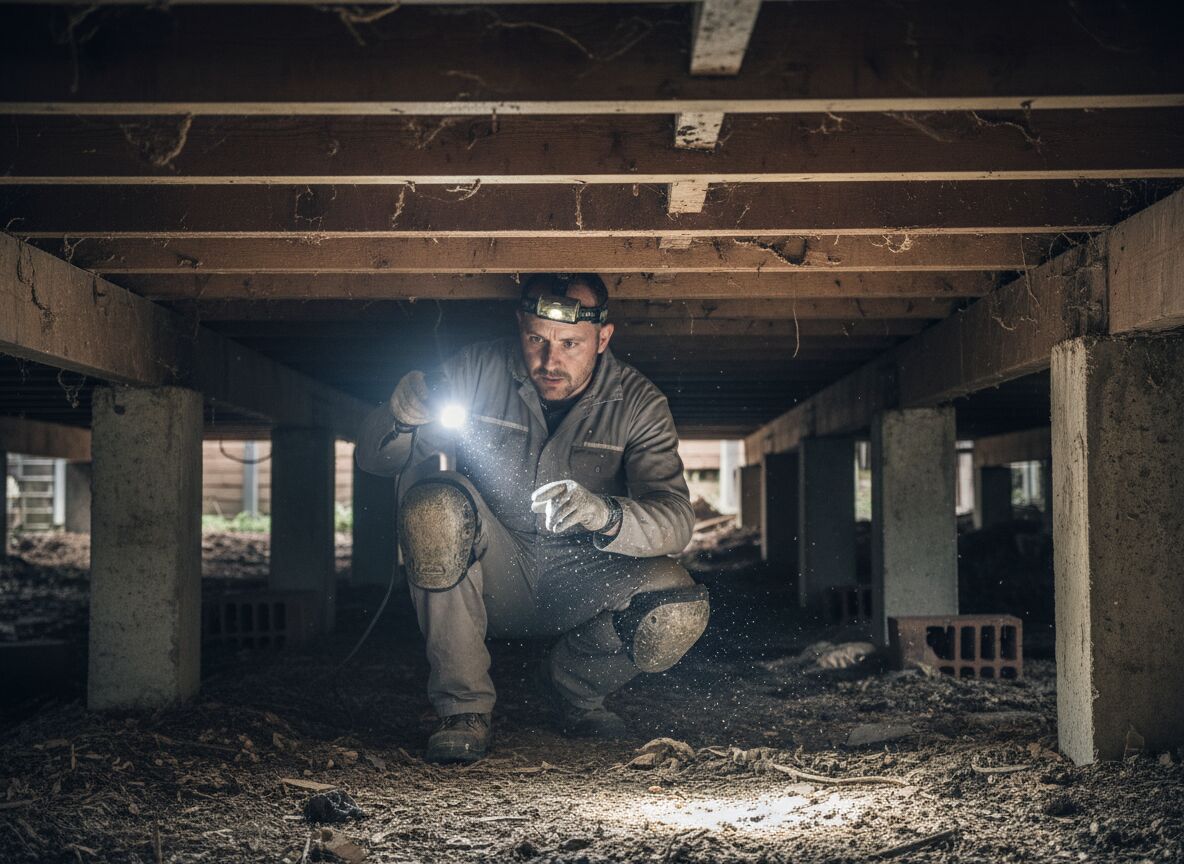
A trained timber pest technician inspects every accessible area — subfloor, roof void, interior, exterior, garden timbers and fences — using timber sounding, moisture meter, thermal imaging and borescope where needed. You receive a written report covering what was found, what is at risk, conditions conducive to activity, and recommended next steps.
Do you install termite barriers on new builds and renovations?
Yes. We install Termidor chemical soil barriers for new construction, extensions and renovations where the slab edge and subfloor are accessible. Installation at construction stage is often the most effective and least disruptive time to establish a barrier. Talk to us before the slab is poured or the perimeter is backfilled.
Due for your annual inspection?
Don’t wait until termite damage becomes obvious — book an inspection or talk to us about the right protection for your property.