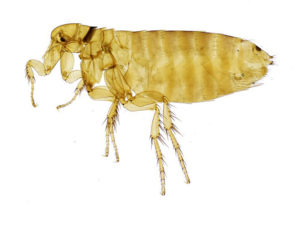
DESCRIPTION
While fleas are reasonably common pests, they do not seem to be a major pest in commercial situations. There are however some specifics which should be noted.
LIFE CYCLE
Fleas undergo a complete metamorphosis-egg >larva>pupa (cocoon)>adult. Following a blood meal the female lays between 4 - 8 eggs. In her lifetime she may lay several hundred. Most eggs are laid on the host and gradually fall off in various areas visited by the host. Larger concentrations are often found where the host (often a pet) sleeps. Eggs hatch in 2 - 14 days.
Larvae feed on organic material available on the surface on which they crawl. Adult fleas excrete undigested blood in the form of dark granules; this is a food supplement for the larvae. This feeding process lasts for around 15 days. The larvae then pupate.
The pupal stage may last from 7 days up to 1 year.
T he entire life cycle can be as short as 18 days or more than a year in less favourable circumstances.
Adult fleas can for 500 days and up to 4 months without food.
HABITAT
Fleas will be found scattered wherever the host travels however, greater numbers will be found in areas where the host rests. Once the eggs fall off and the life cycle starts the larvae usually head to quieter areas of the floor, such as around edges of walls and furniture. If outside they can be found in dirt and dust under dwellings, as well as in the grass particularly under trees or bushes where pests rest.
Concerned about fleas at your property? Contact Pest-Nett today for identification and treatment.
Call 07 3206 6721Treatment optionsIdentify my pestBrowse the full guide.
← Back to the Pest ID Guide — browse all 40+ Brisbane pests by photo.